Employee Management
A responsive HR platform to manage employee records, attendance, leave management, and performance tracking.
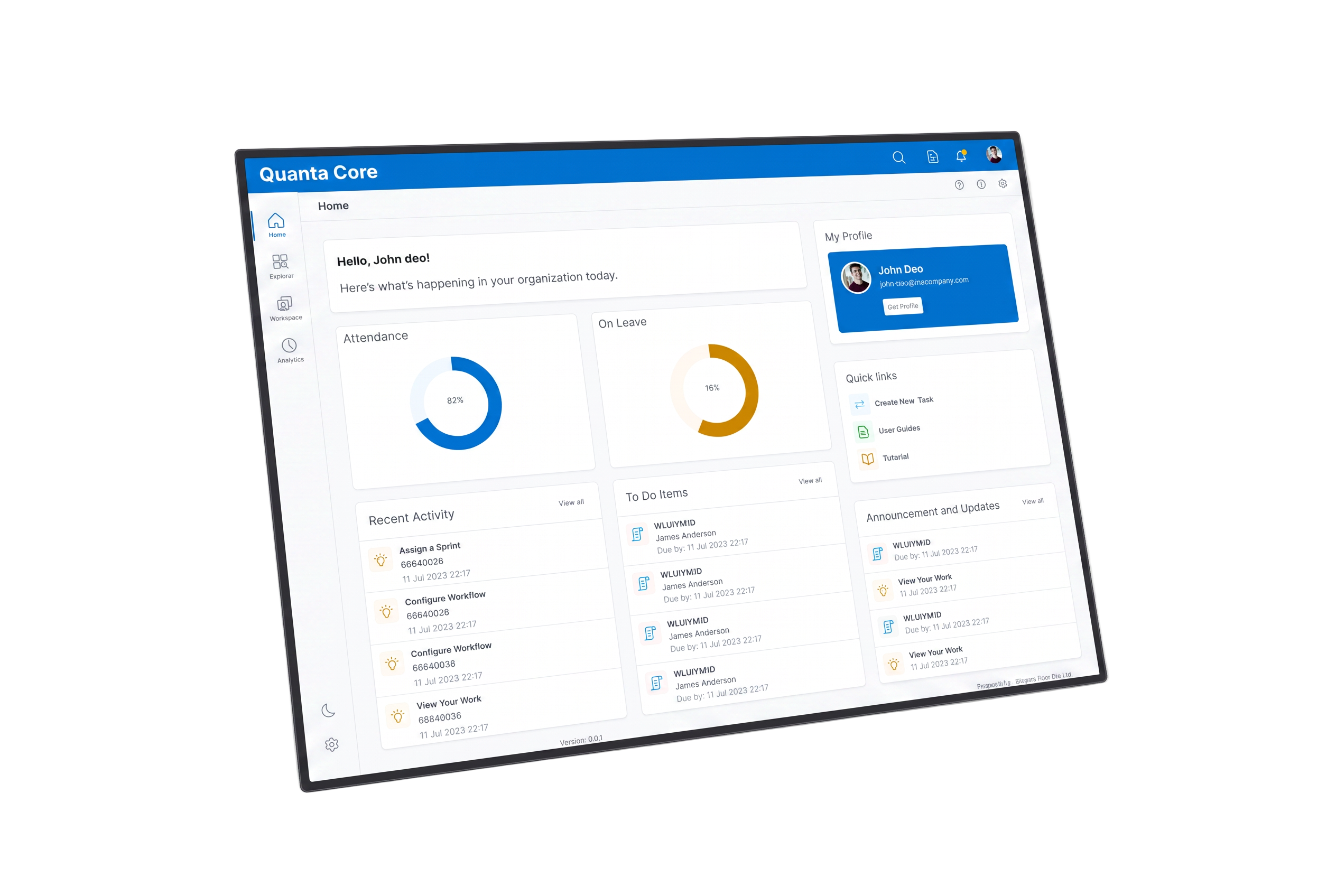
- Role
- UI/UX Designer
- Domain
- HR / Enterprise SaaS
- Timeline
- 6+ months
Overview
The project focused on designing a centralized Employee Management platform to simplify daily HR tasks such as employee management, attendance, and leave requests. The goal was to create an intuitive experience for HR managers, team leads, and employees.
Problem Statement
HR processes were spread across multiple workflows, making routine tasks time-consuming and difficult to manage. Users needed a simpler way to access and complete everyday HR activities.
Business & User Context
Business Goal
- Centralize HR operations
- Simplify daily workflows
- Improve productivity with role-based access
Users
- HR Managers
- Team Leads
- Employees
Platform
- Desktop and laptop (primary), tablet (secondary)
Research
Stakeholder Discussions
Understanding business goals, existing workflows, and operational challenges.
Workflow Analysis
Identifying where users experienced unnecessary steps and navigation issues.
Secondary Research
Studying common HR platform patterns and expectations.
Key Findings
- • Navigation between modules was confusing.
- • Common HR tasks required too many steps.
- • Users needed a clearer and more organized interface.
Wireframes
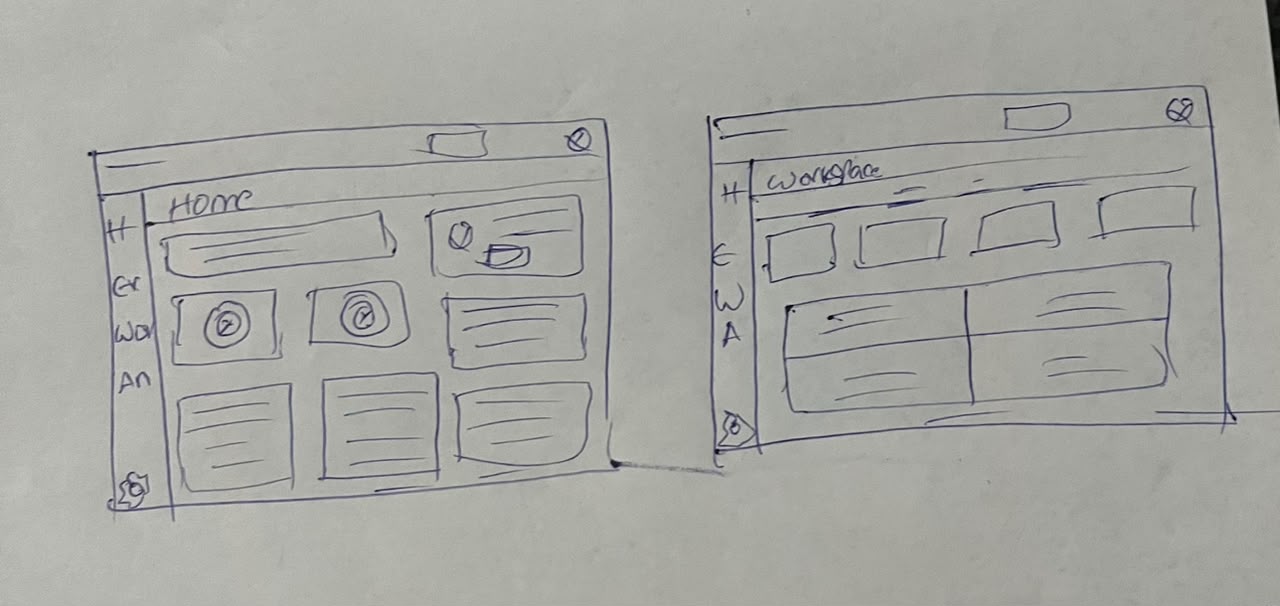
I created low-fidelity wireframes to explore layouts, organize content, and validate the overall navigation before moving to visual design.
High-Fidelity UI
The main screens are the Home dashboard and Workspace overview.
The interface focuses on clear navigation, simple layouts, and consistent interactions.
Prototype
Challenges & Iterations
Challenge
Managing multiple HR features without making the interface overwhelming.
Solution
I grouped features based on user roles, simplified navigation, and improved dashboard hierarchy through design reviews and feedback.
Final Outcome
The final prototype provides a centralized HR platform with an intuitive, role-based experience.
Outcomes
- • Simplified navigation
- • Organized HR workflows
- • Consistent user interface
- • Interactive prototype for stakeholder review
Key Learnings
- • Complex products need clear prioritization rather than simply exposing every available feature.
- • Role-based experiences can reduce unnecessary navigation and help users focus on their primary tasks.
- • Design decisions become stronger when they are connected directly to research and workflow observations.
- • Reusable patterns are important when designing products expected to grow over time.